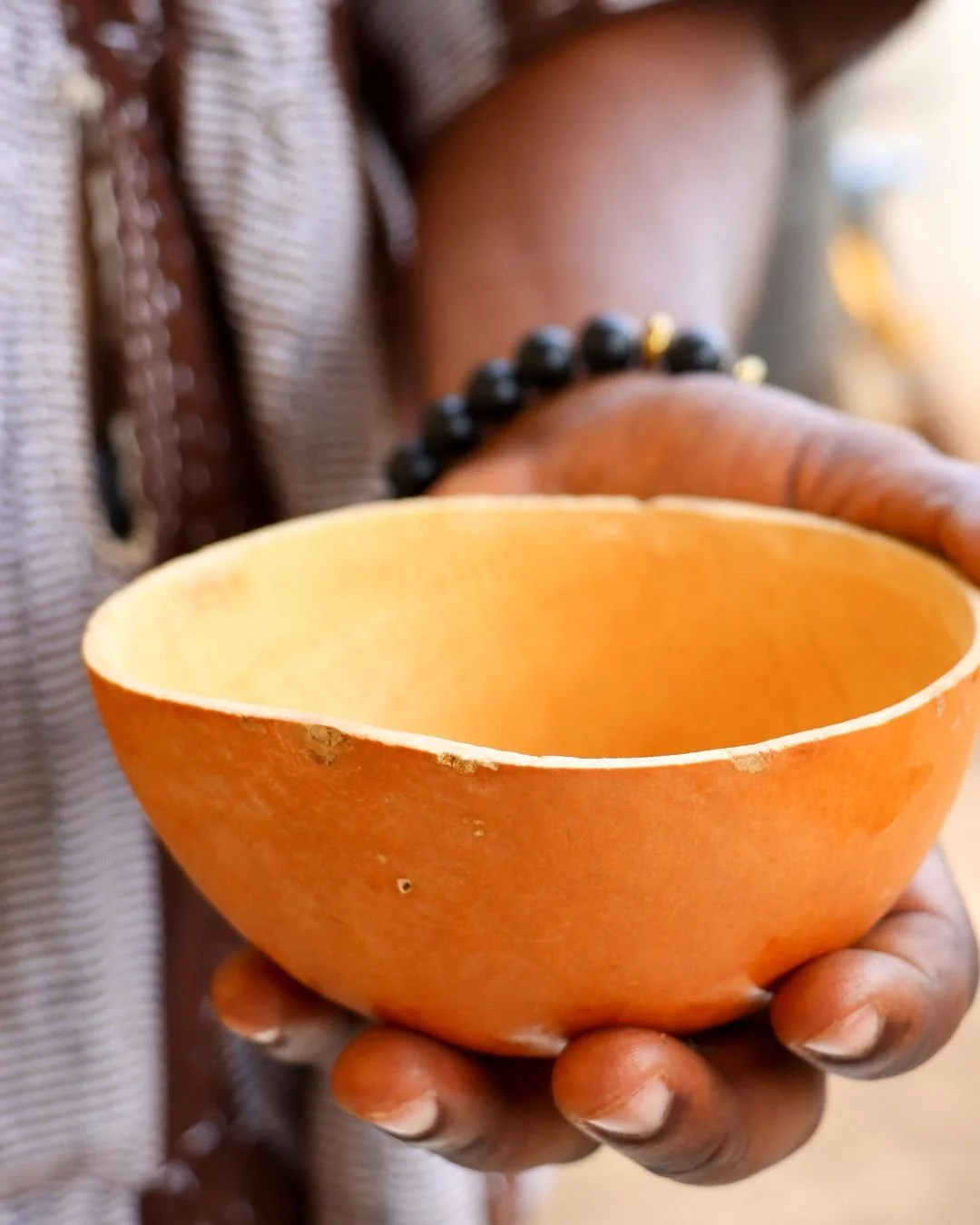
About Your Calabash
The Iyegua (Ee-Yegah): A Global Indigenous Tradition
About The Calabash
Many people have lost connection to their ancestral cultures. Through colonization, displacement, and modernization, entire traditions and practices have been erased or forgotten.
Known as an Iyegua by the Dogon of Burkina Faso, the calabash is a powerful first step in the reconnection journey. Because gourds have been used across indigenous cultures worldwide—whether coconuts in the tropics, calabashes in Africa, or Jicaras in Mexican households—this tool transcends any single tradition.
The Dogon are helping people reconnect to their own cultures through this shared practice.
This calabash connects you to thousands of years of indigenous wisdom. By using it with intention—whether for daily tasks or sacred ceremony—you are participating in ancestral practices that have sustained communities across Africa and beyond.
The Two Fold Importance of Calabashes
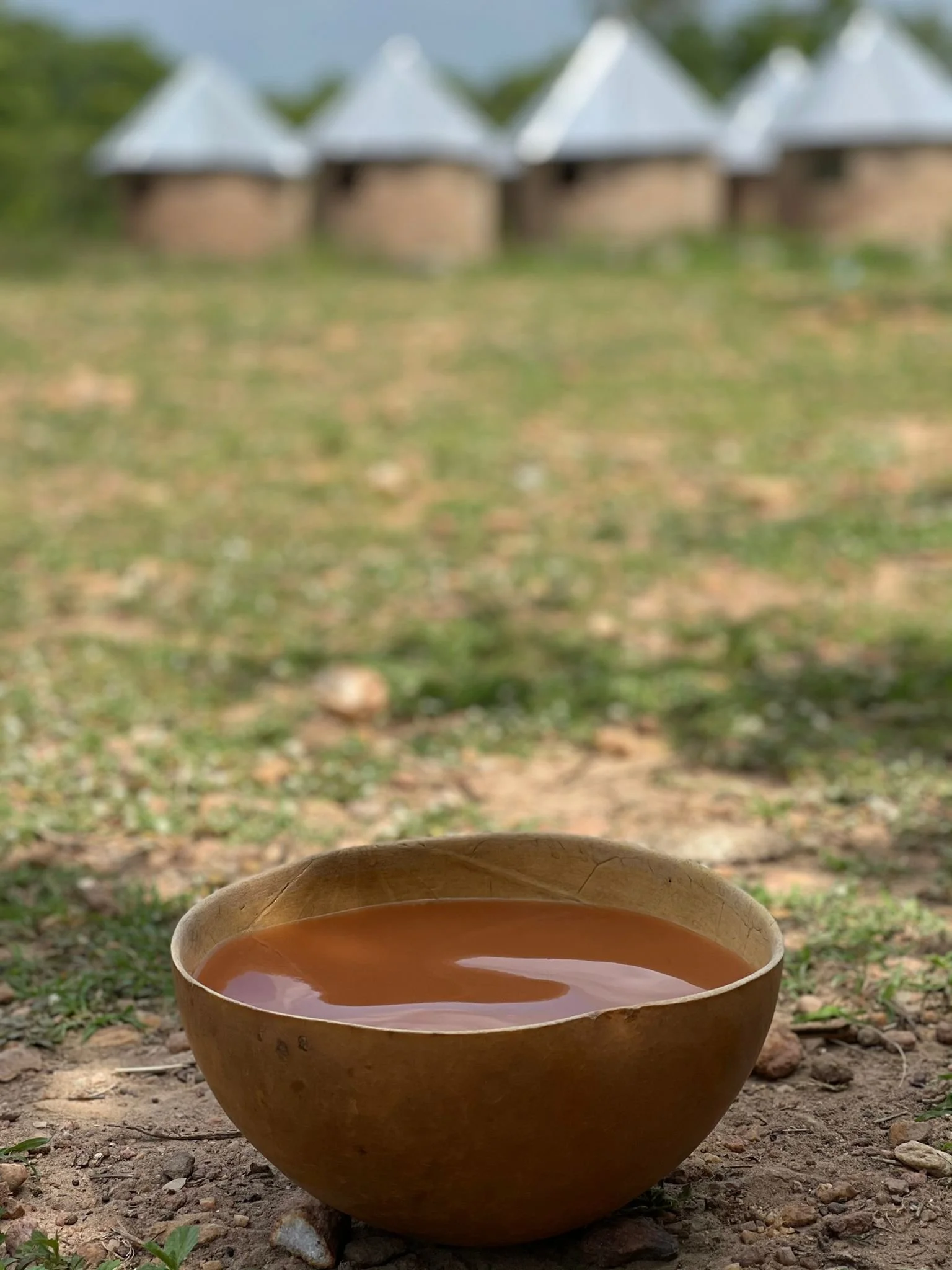
Understanding the calabash requires recognizing both its practical utility and its spiritual significance—indigenous excellence is never one without the other.

Spiritual Significance
Calabashes hold deep spiritual importance. Their circular shape mirrors the way nature works—cyclical and spherical, connecting us to the natural rhythms of the earth.
Most importantly, calabashes are used in ceremonies and offerings, often serving as vessels to offer water, milk, or alcohol to ancestors and spirits.
How To Use Your Iyegua (Calabash)
Ceremonial Use: Pouring Libations
For beginners: Learning how to pour libation has many levels. This approach we are sharing is the simplest way, meant to open the way for your ancestors to reveal the next step in your reconnection journey.If you're new to ancestral practice, start here. This simple daily ritual will open the way for deeper connection.
Step-by-step instructions:
Prepare: Fill your calabash with fresh water. Hold it in your right hand.
Find your spot: Choose a place outdoors where you can go daily—this could be under a tree, in your garden, or any natural space.
Kneel: Get close to the ground, showing respect to the earth and your ancestors.
Introduce yourself: Speak to the land and to your ancestors. Tell them your name, your lineage if you know it, and your intentions. Call on your Ancestors from your mother’s side, father’s side and grandmothers’ sides.
Ask for guidance: Let them know that you are learning and that you are asking them to open the way for you to continue learning.
Pour: As you speak, pour a portion of the water onto the ground as an offering.
Receive: When finished, take a sip of the remaining water, completing the reciprocal relationship between you and the ancestors.
For more direct guidance on your reconnection journey, contact our sister organization Ankhkasta Natural Healing and/or learn more through Harnessing Dogon Wisdom, on our Dogon Learning Platform.
Practical Uses for Daily Living
Serving food - For communal meals and family gatherings
Bathing - Pouring water for cleansing
Drinking - Personal water vessel
Hospitality - Very important symbol of hospitality, use it to offer guests fresh water after long travel
Celebrations - Holding alcohol for ceremonial toasts
Medicine - Preparing and storing herbal remedies
Care Instructions
-
To keep your calabash in good condition throughout its lifetime, follow these simple guidelines.
Rinse the calabash with clean water
Make sure the calabash dries completely before storing
Leave it in the sun to fully dry, or place it near a warm area in your home
-
Calabashes are organic vessels, so some mold occurrence is natural and normal.
If your calabash begins to mold:
Leave it out in direct sunlight to dry completely
Once fully dry, scrape the affected area off with a clean tool
Rinse again and ensure thorough drying before next use
-
Proper drying after each use will keep your calabash in good condition throughout its lifetime.